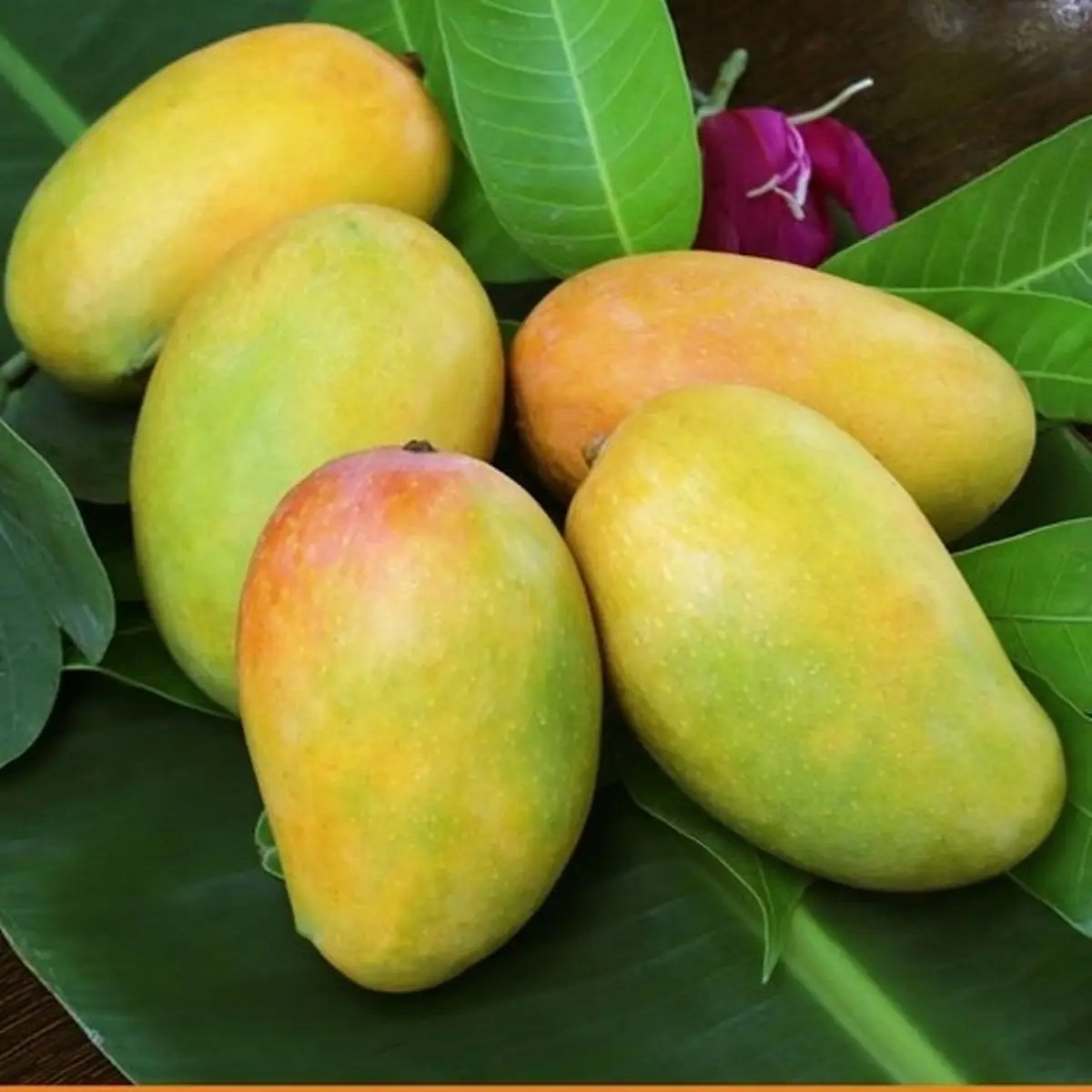
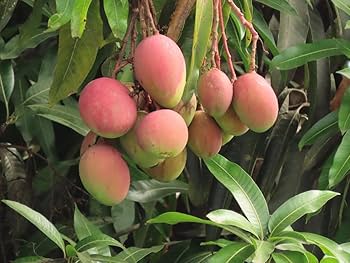
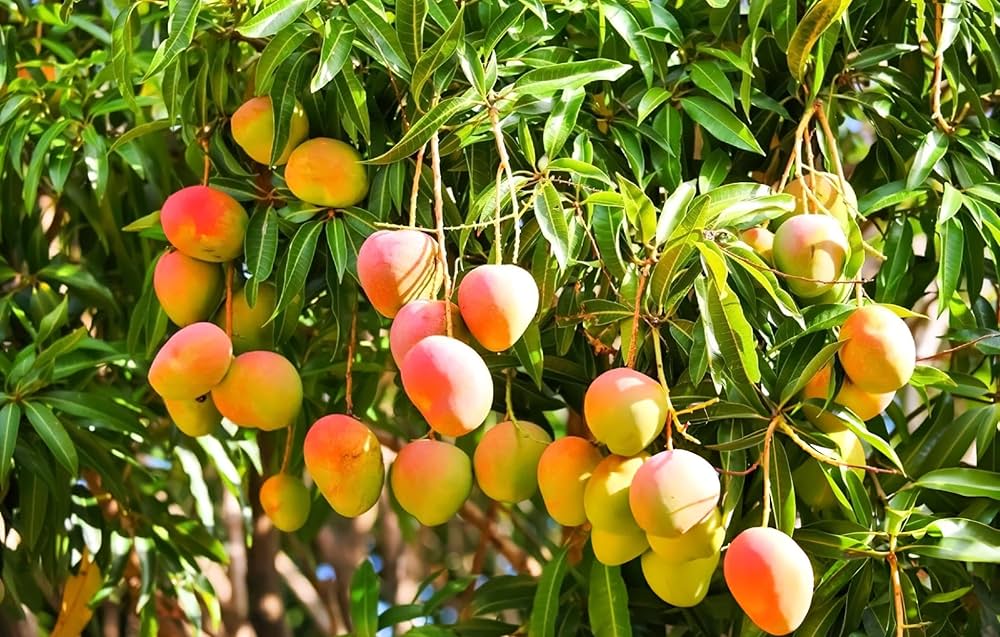
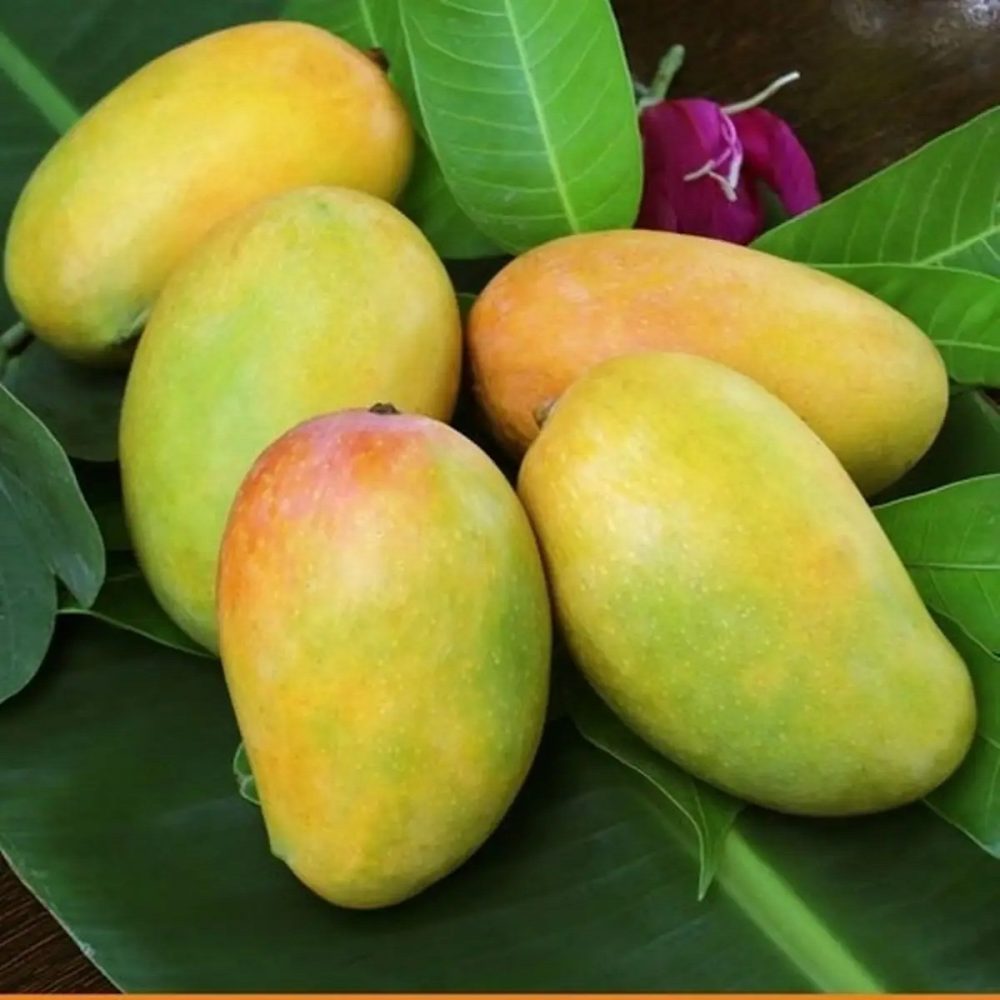
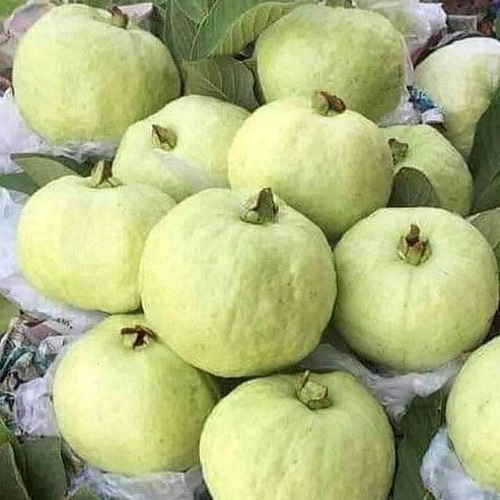
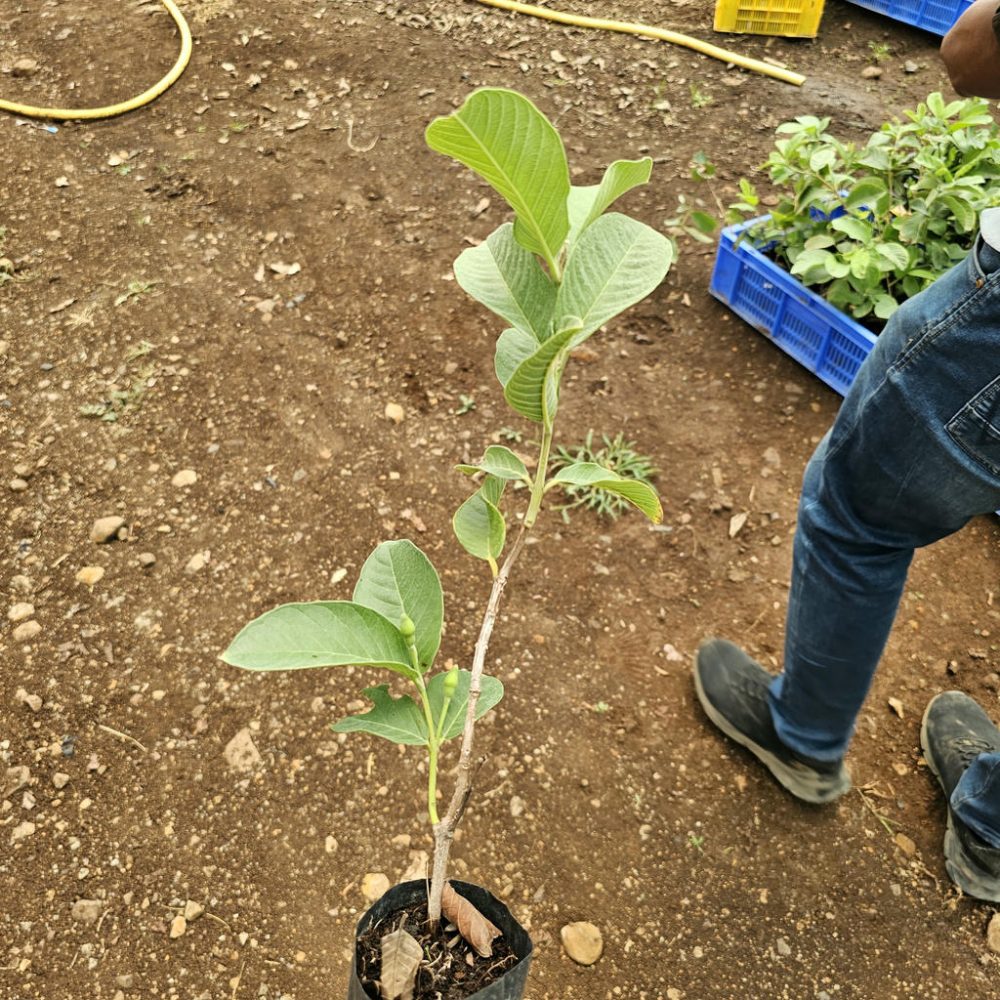
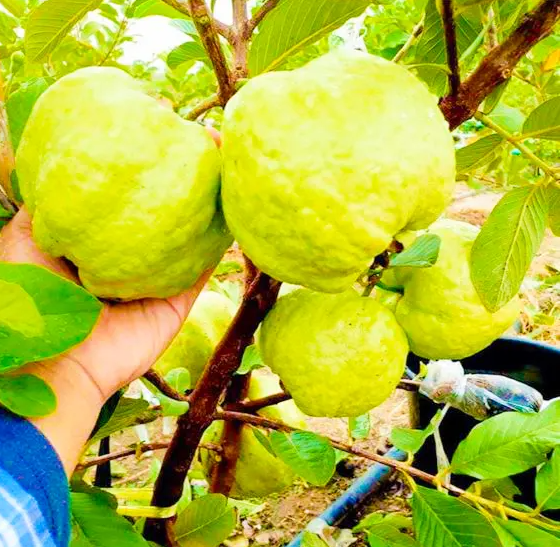
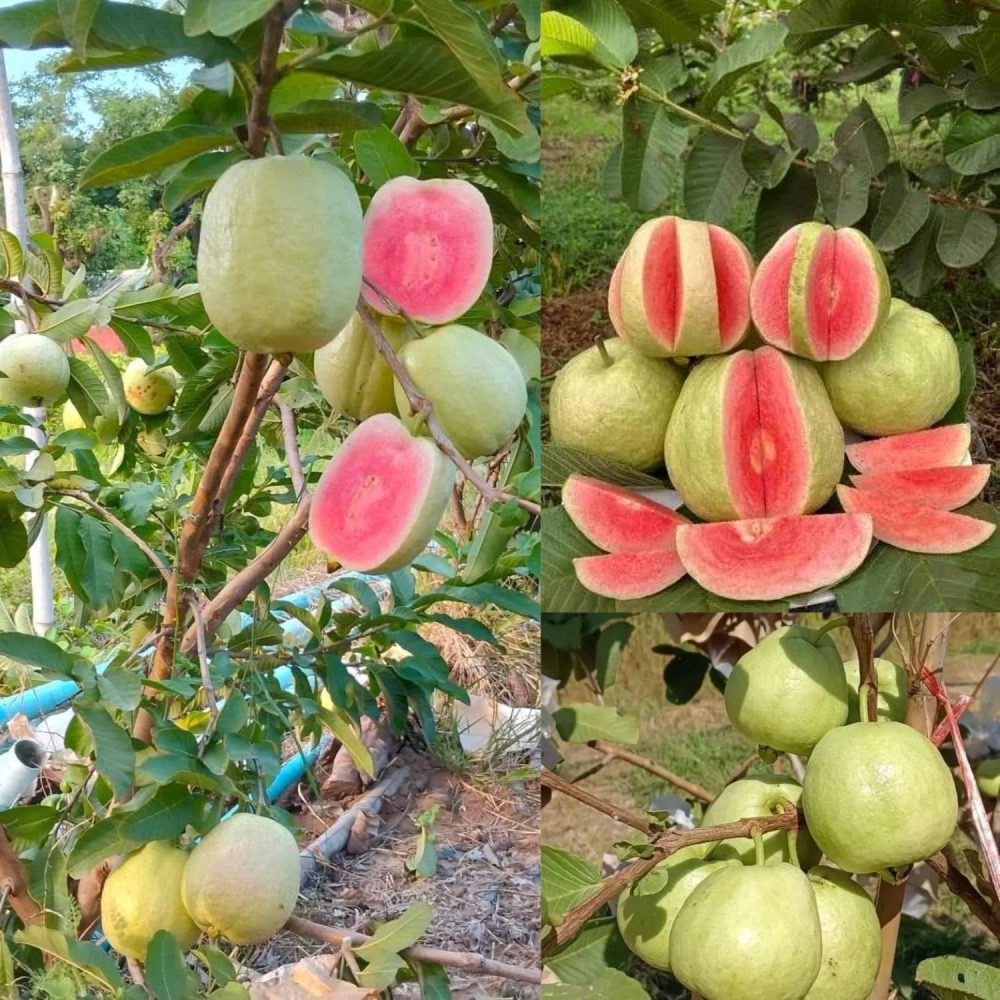
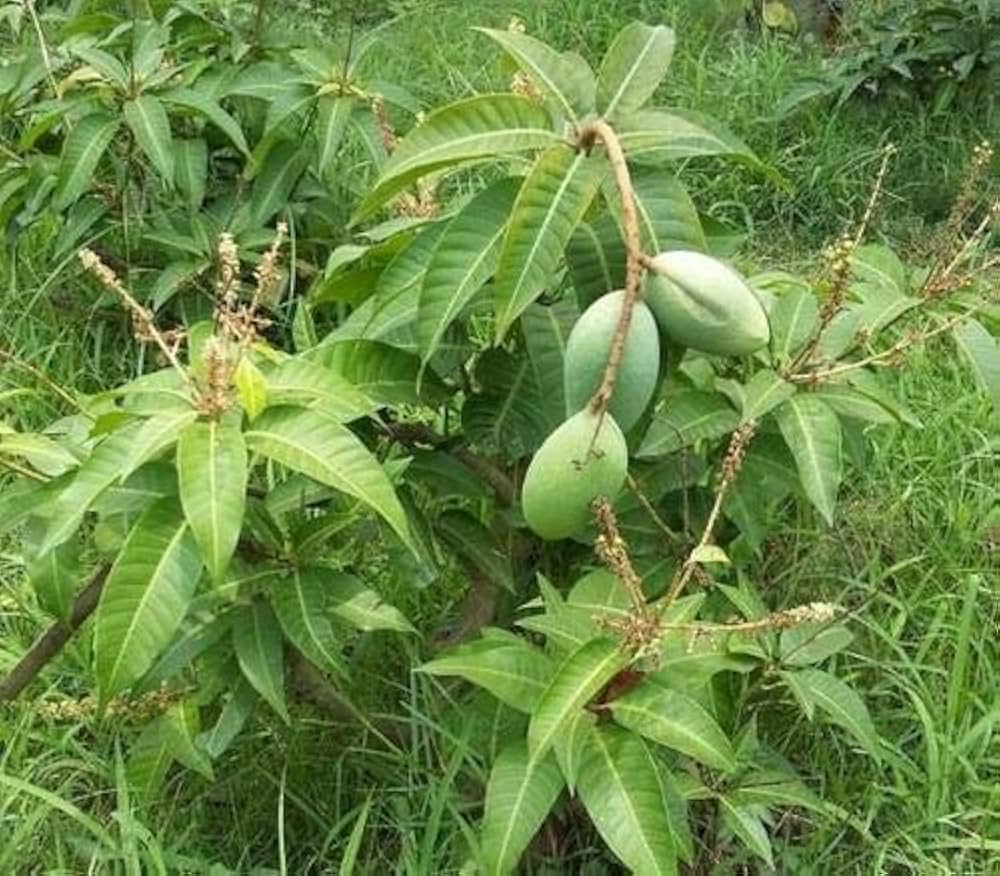
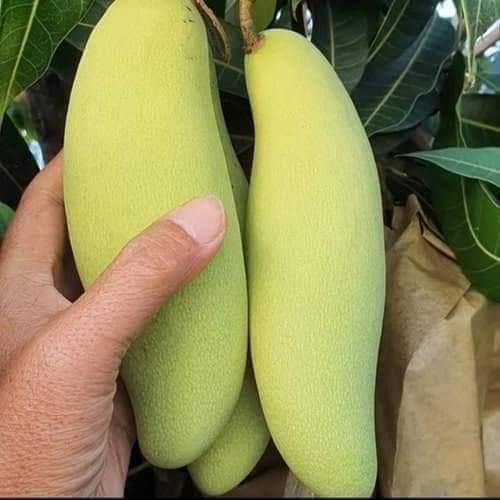
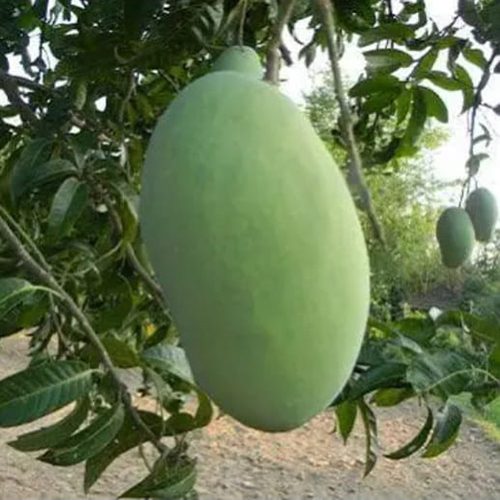
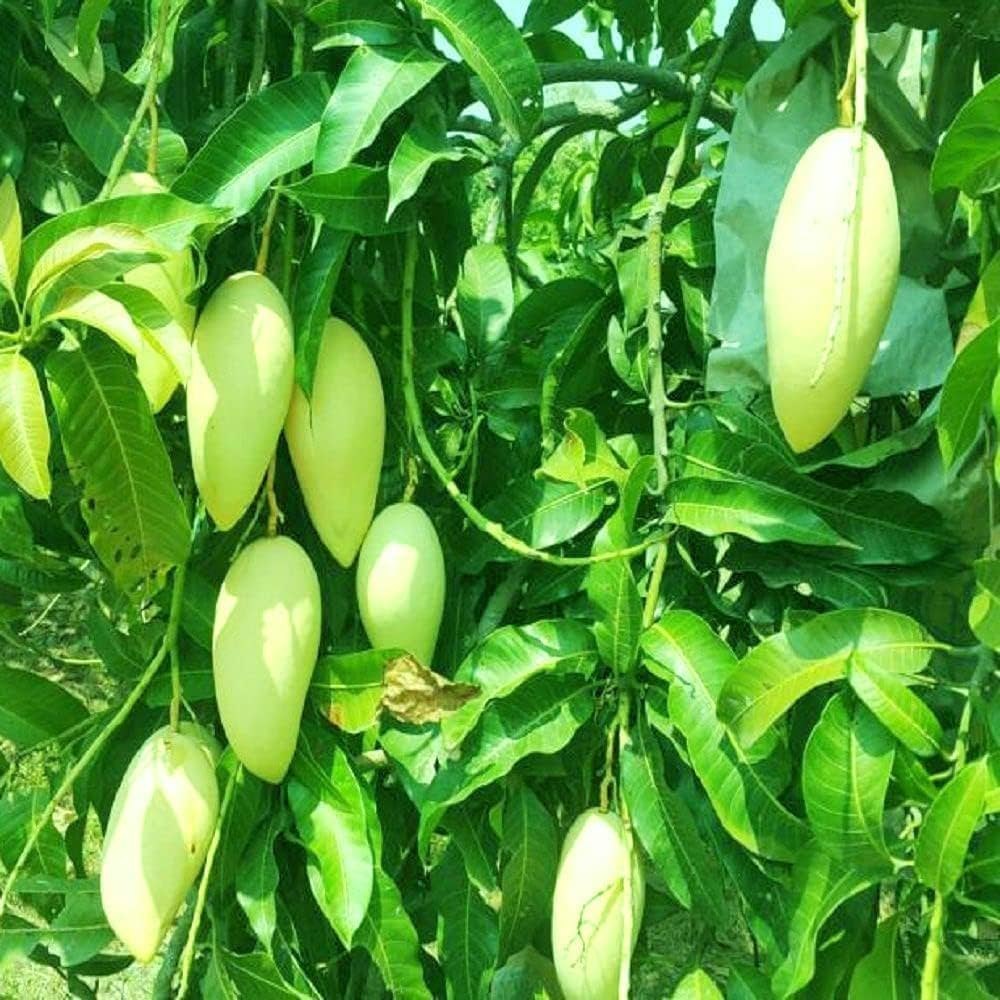
The Kesar mango plant is one of India’s most prized commercial mango varieties — known for its deep saffron-yellow pulp, intense sweetness, and low-fibre texture. Originally from Junagadh, Gujarat, Kesar (केसर आम / Kesar Aam) has earned the “Queen of Mangoes” title in export and processing markets alike. Madhyanchal Nursery supplies NHB 2-Star certified grafted Kesar mango saplings with a proven track record for vigorous growth and early fruiting — minimum order 500 plants for bulk commercial supply.
Kesar Mango — Quick Facts
Botanical name
Mangifera indica ‘Kesar’
Hindi name
केसर आम (Kesar Aam)
Origin
Junagadh, Gujarat, India
Fruiting season
May – July
Time to first fruit (grafted)
2–3 years
Yield (mature orchard)
8–14 tonnes/acre
Spacing
5m × 5m (approx. 160 plants/acre)
Suitable climate
Semi-arid to sub-tropical; MP, Gujarat, Rajasthan, Maharashtra
Kesar mango commands a premium both in domestic wholesale markets and in the processed food sector. Its intensely coloured, fibre-free pulp is the preferred variety for mango pulp exports, canned mango, and premium juice. That processing demand means prices hold up even in a bumper crop year — unlike table-fruit varieties that can see sharp wholesale price drops when supply spikes.
At 160 plants per acre (5m × 5m spacing), a well-managed Kesar orchard typically yields 8–14 tonnes per acre from Year 4 onwards. At a conservative farm-gate price of Rs. 20–35 per kg, that is Rs. 1.6–4.9 lakh per acre per season. Grafted plants from our NHB-certified nursery fruit in 2–3 years, bringing your orchard into commercial production significantly faster than seedling-grown trees.
Kesar Mango Cultivation in Madhya Pradesh
Madhya Pradesh’s black cotton soil (Vertisol) belt — covering Nimar, Malwa, and Sehore districts — supports Kesar mango well. The warm summers (40–45°C in May), moderate winter cold (8–12°C in December), and annual rainfall of 700–1,100 mm match the variety’s requirements closely. Water stress during flowering (February–March) actually improves fruit set; many MP farmers manage this naturally on rainfed land or with light supplemental irrigation. Kesar’s adaptability to semi-arid conditions makes it a lower-risk commercial crop compared to high-water varieties.
In the Nimar valley specifically, farmers have had consistent success with Kesar due to the region’s warm winters and deep alluvial-blend soils along the Narmada belt. The variety also performs reliably in the Malwa plateau where black cotton soil retains moisture well into the dry months, reducing irrigation dependency during the critical flowering phase.
Planting Calendar — When to Plant Kesar Mango
The best planting window for Kesar mango in Madhya Pradesh is July–August (monsoon onset) or February–March (before the summer peak). Monsoon planting reduces irrigation costs in the first year significantly and allows roots to establish before winter dormancy. For farmers in water-scarce regions, monsoon planting is strongly preferred.
Pit preparation should be done 30 days before planting. Recommended pit size: 60cm × 60cm × 60cm, filled with a mix of topsoil, farmyard manure (10–15 kg per pit), and single superphosphate. Allow pits to weather for at least 15 days before transplanting saplings.
Varieties of Kesar Mango Available
All Kesar mango plants at Madhyanchal Nursery are grafted (not seedling-grown). We supply a single commercially proven line selected for consistent saffron-yellow colouration, high pulp-to-fibre ratio, and exportable fruit size (250–400 g per fruit). Our stock is sourced from certified budwood maintained under NHB protocols, ensuring varietal purity.
If you are looking to diversify your orchard with Kesar as one of multiple varieties, we also supply Amrapali mango plants (आम्रपाली) — a dwarf variety suited to high-density planting — and Chausa mango plants, which extend your harvest window into July–August. Staggering varieties across your orchard spreads market-supply risk and gives you overlapping fruiting seasons.
Commercial Farming Cost & Profit — Per Acre Estimate
Input
Year 1 (establishment)
From Year 4 (productive)
Plants at standard density
Rs. 75,000–1,20,000
—
Land preparation, pits, irrigation setup
Rs. 25,000–40,000
Rs. 8,000–12,000
Fertiliser + pest management
Rs. 10,000
Rs. 15,000–22,000
Harvest & labour
—
Rs. 12,000–18,000
Gross revenue/acre
—
Rs. 1,60,000–4,90,000
Net profit/acre (approx.)
—
Rs. 1,25,000–4,40,000
Note: Revenue range reflects 8–14 tonnes/acre yield at Rs. 20–35 per kg farm-gate. Actual results vary by soil, irrigation, and local market conditions.
Post-Harvest & Market Linkage
Kesar mango has one of the strongest processing market linkages among Indian mango varieties. Major buyers include:
Mango pulp units — processors in Surat, Valsad, and Pune buy Kesar in bulk during May–June at contract rates agreed before season
Export market — GI-tagged Kesar (Junagadh) commands export premiums to the Gulf and UK markets; MP-grown Kesar can qualify with proper packing-house certification
Local wholesale mandis — Indore, Bhopal, and Ujjain mandis see strong Kesar demand from retailers and street vendors from mid-May onwards
Farmers growing on 3+ acres should explore pre-season supply agreements with local pulp processors before planting — this locks in a minimum off-take price and reduces market risk in Year 4 when your orchard first produces at commercial scale.
Frequently Asked Questions — Kesar Mango Plant
How long does a grafted Kesar mango plant take to give fruit?
Grafted Kesar mango plants from Madhyanchal Nursery typically produce their first commercial fruit in 2–3 years after planting, compared to 6–8 years for seedling-grown trees. The grafted rootstock gives the young plant a head start by using an established root system. Proper pit preparation, organic matter, and timely irrigation in the first year are the biggest factors in hitting the 2-year mark.
How many Kesar mango plants fit in one acre, and what is the spacing?
Standard planting for Kesar mango is 5m × 5m, giving approximately 160 plants per acre. High-density plantings at 3m × 5m (around 267 plants per acre) are also practised where irrigation is assured — this maximises early years’ yield before canopies close. Discuss your orchard design with us when placing your order and we’ll suggest the right spacing based on your soil and irrigation setup.
Is Kesar mango suitable for Madhya Pradesh’s climate?
Yes. Kesar performs well in MP’s semi-arid to sub-tropical climate. It tolerates the high summer temperatures of Nimar and Malwa (up to 45°C) and benefits from mild winter chilling for proper dormancy. The key risk in MP is frost damage in extreme cold years (below 4°C) — young trees in their first winter need light protection in northern MP districts. From Year 2 onwards, established trees handle local conditions reliably.
What is the minimum order quantity for Kesar mango plants?
Our minimum order is 500 plants. This MOQ reflects our nursery’s production scale as an NHB 2-Star certified bulk supplier — we grow for commercial farmers and orchard developers, not retail garden buyers. For orders of 500–2,000 plants, delivery timelines and per-plant pricing are confirmed at order booking. Call or WhatsApp us to check current stock and reserve your lot before the planting season.
How do I transport 500+ Kesar mango plants safely over long distances?
All plants are dispatched in ventilated cartons with moist coir packing around root balls. We have dispatched plants successfully to Maharashtra, Gujarat, Rajasthan, and Uttar Pradesh via truck transport (1–3 days transit). For orders above 1,000 plants, dedicated vehicle loading is arranged. Survival rates on properly packed dispatch consignments consistently run above 95%. We provide dispatch photos and a plant-count certificate with every order.
Related Mango Varieties
Looking to diversify your mango orchard? Compare Kesar with other commercial varieties we supply:
Chausa Mango Plant — late-season variety (July–August), extends your harvest window by 6–8 weeks
Browse all fruit plants — full nursery catalogue including guava, lemon, and custard apple varieties
Order Kesar Mango Plants — Bulk Enquiry
Madhyanchal Nursery is an NHB 2-Star certified nursery in Madhya Pradesh, supplying grafted fruit plant saplings to commercial farmers across India. All Kesar mango plants are grafted on healthy rootstocks, hardened at our nursery, and dispatched with proper packing for long-distance transport. We supply bulk orders to individual farmers, FPOs (Farmer Producer Organisations), and government horticulture projects.
To place a bulk order of 500+ Kesar mango plants, call or WhatsApp: +91-9753884743
Fruit & Vegetable Plants We Offer हमारे उपलब्ध फल व सब्ज़ी पौधे