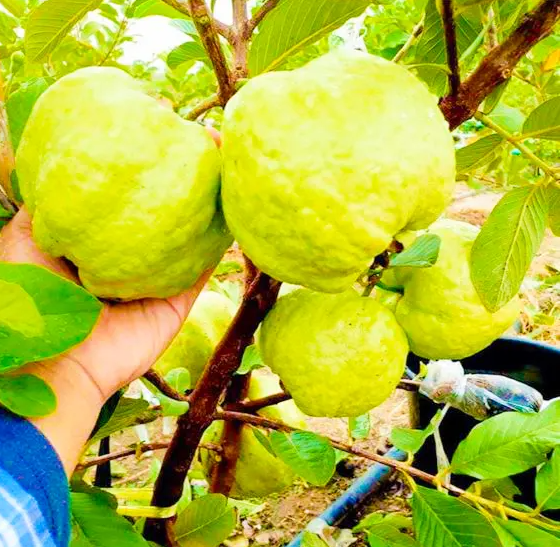
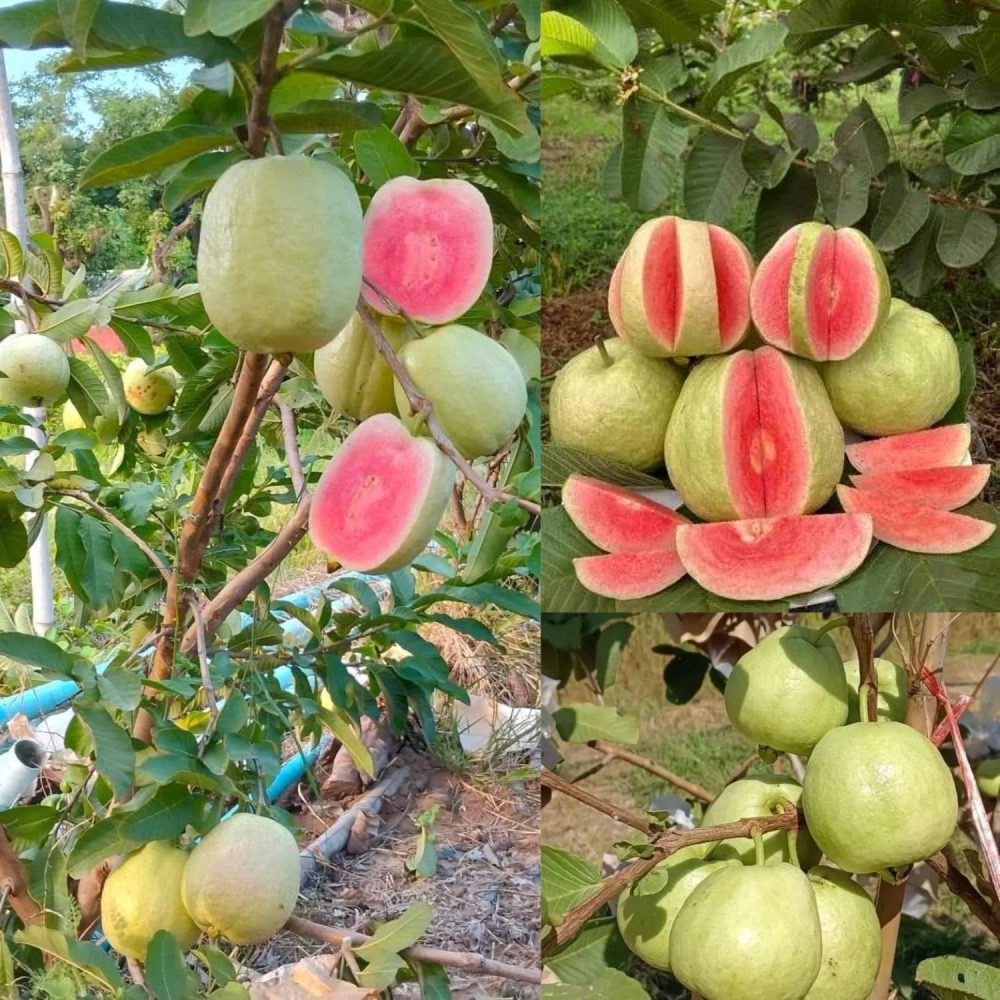
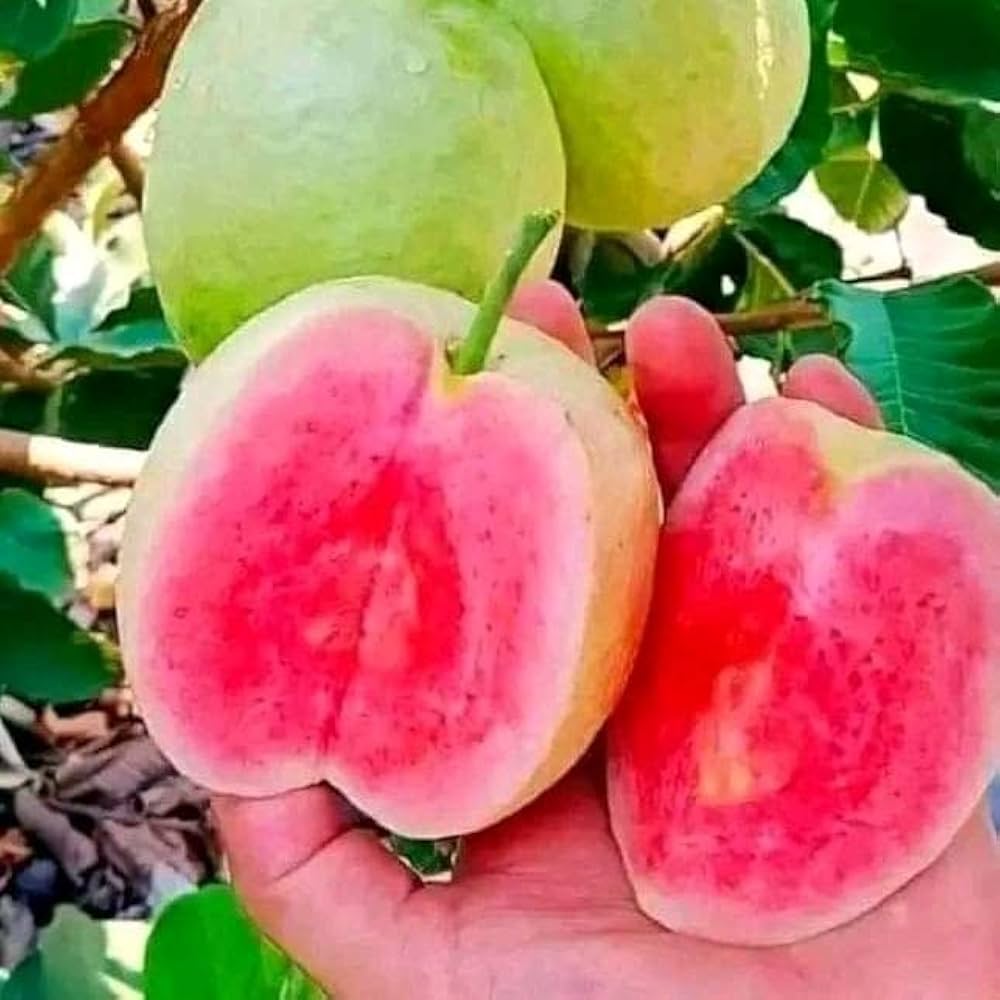
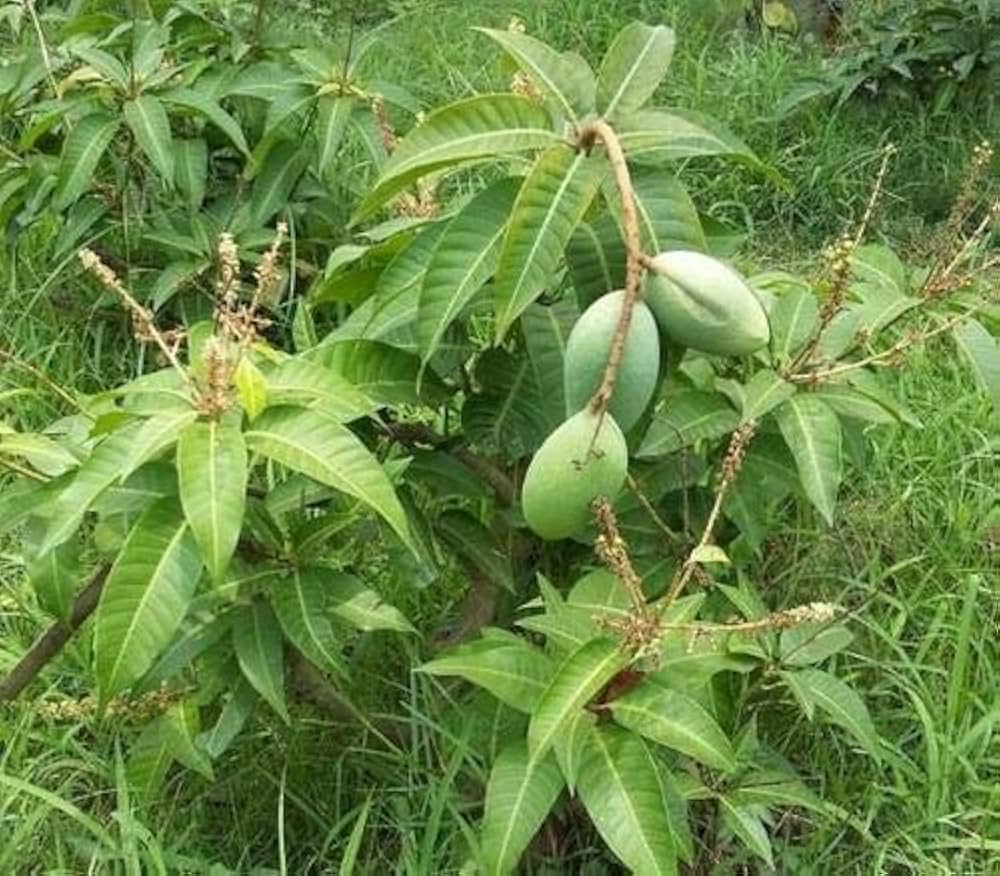
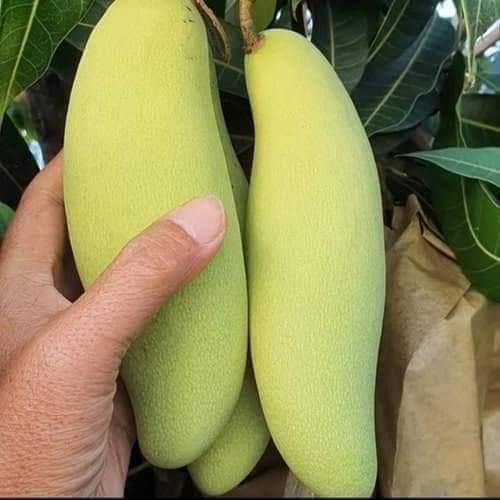
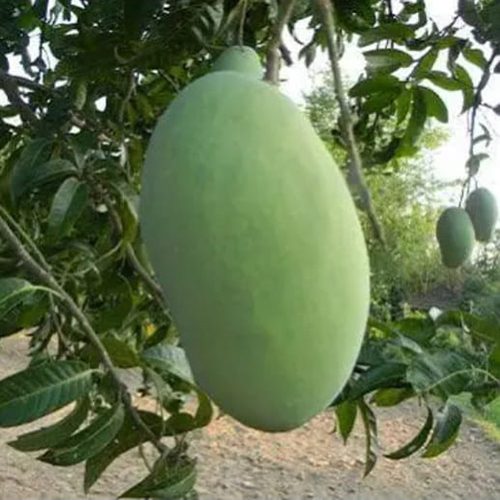
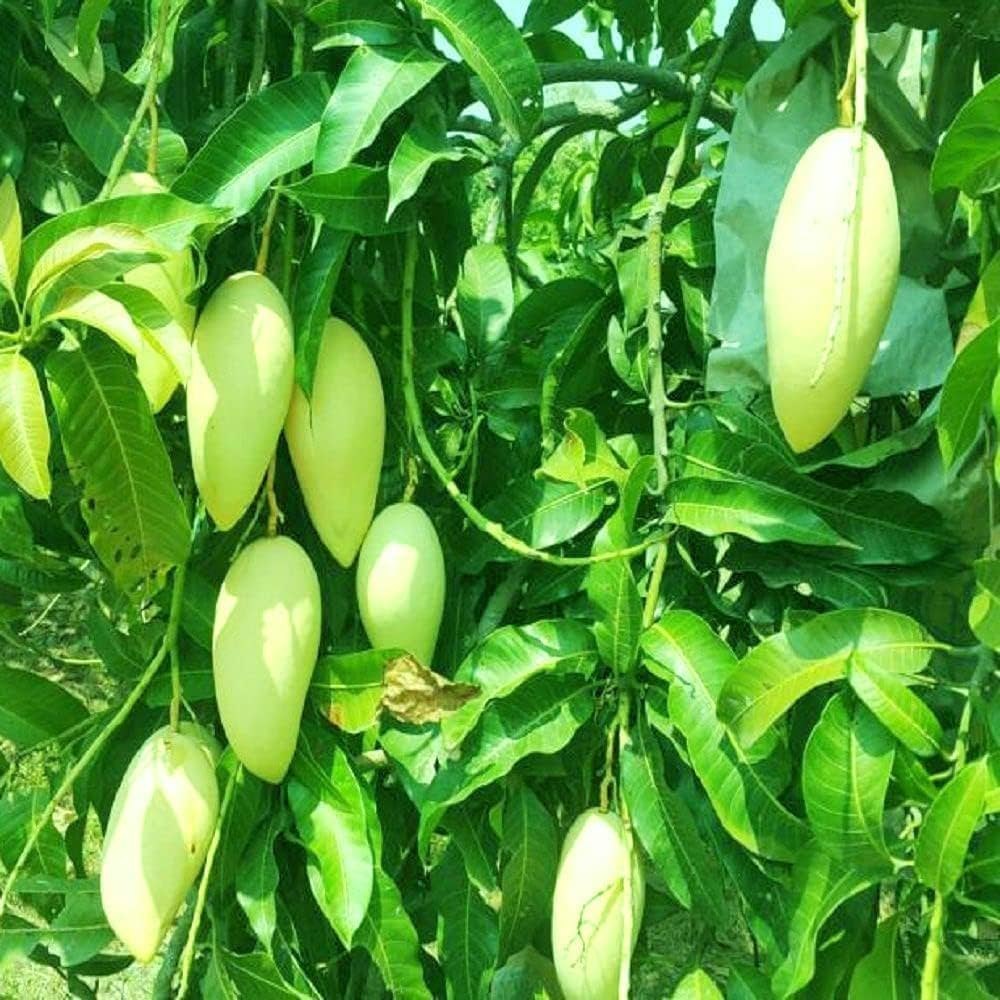
Looking to buy Hanuman Phal Soursop plant online in bulk? Madhyanchal Nursery supplies grafted Soursop (Annona muricata) saplings — locally known as हनुमान फल or Laxman Phal — to commercial orchardists across India. Our NHB 2-Star certified nursery in Madhya Pradesh provides disease-free, true-to-type grafted plants with documented lineage. Minimum order: 500 plants.
Hanuman Phal (Soursop) — Quick Facts
Botanical Name
Annona muricata L.
Hindi / Local Name
हनुमान फल, लक्ष्मण फल, शूलराम फल
Family
Annonaceae (same family as Custard Apple)
Fruiting Season
June – September (primary); some off-season fruiting possible
Time to First Fruit
18–24 months (grafted); 3–4 years (seedling)
Suitable Climate
Tropical/sub-tropical; 25–32°C; no frost tolerance
About Hanuman Phal (Soursop) — Why Farmers Are Turning to This Crop
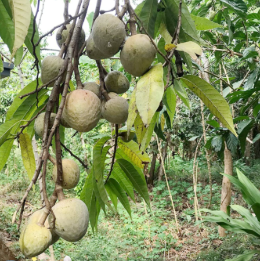
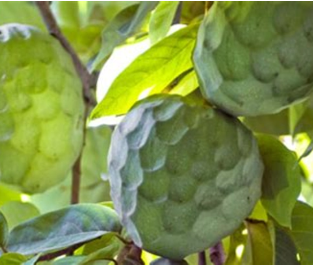
Soursop (Annona muricata), called हनुमान फल in Hindi, is an exotic tropical fruit gaining fast commercial traction in India. Its large, spiky green fruit — weighing between 1 kg and 5 kg each — contains a creamy white pulp that commands premium prices in urban juice bars, ice cream parlours, and health food segments. Farm-gate prices in India typically range from ₹80 to ₹180 per kg, making a well-managed Hanuman Phal orchard one of the higher-margin tropical fruit options available to Indian farmers today.
Unlike many exotic crops, Soursop is relatively low-maintenance once established. It belongs to the Annonaceae family — the same plant family as Custard Apple (NMK-1 Sitaphal) — and thrives in similar warm, frost-free conditions. Farmers in southern and central Madhya Pradesh, Gujarat, Maharashtra, Andhra Pradesh, and Karnataka have found commercial success with this crop where temperatures stay above 10°C through winter.
Plant Spacing and Plants Per Acre — Plan Your Orchard
Before placing a bulk order, calculate the number of plants required for your land. Soursop trees are medium-sized but need adequate air circulation to minimize fungal issues. Three common planting systems for Indian conditions:
Spacing System
Row × Plant (meters)
Plants Per Acre
Best For
Standard
5m × 5m
161 plants
High rainfall / humid zones
Dense Planting
4m × 4m
252 plants
Dry zones with drip irrigation
Wide Row
6m × 5m
134 plants
Mechanized orchards / intercropping
For most commercial orchards in Madhya Pradesh, the 5m × 5m system (161 plants/acre) is recommended to maintain canopy health and ease of harvesting. At bulk pricing of ₹150–₹250 per grafted plant, the planting material cost for one acre runs approximately ₹24,150–₹40,250.
Why Choose Grafted Hanuman Phal Plants from Madhyanchal Nursery
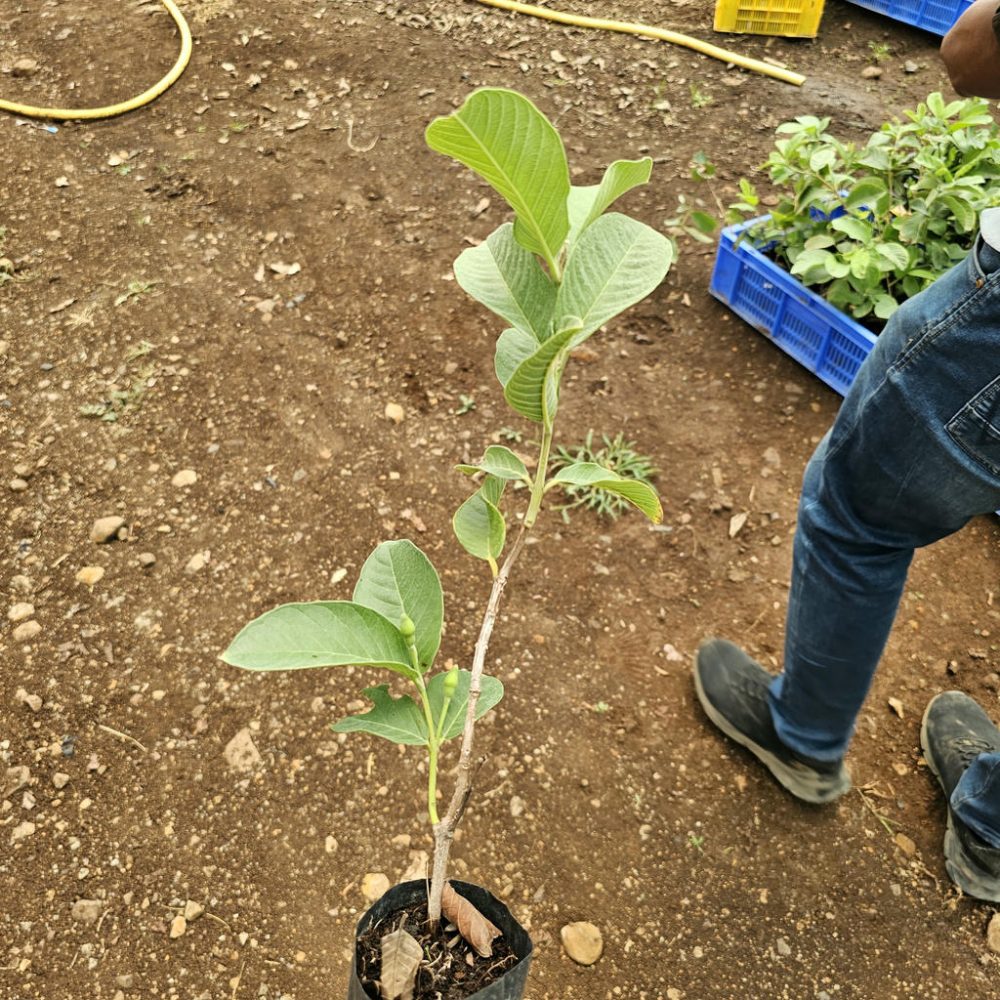
Our grafted Soursop saplings are propagated from high-yielding mother plants selected for large fruit size, consistent pulp quality, and disease resistance. Here is what sets our planting material apart:
NHB 2-Star Certified Nursery: One of the few nurseries in Madhya Pradesh with NHB 2-Star certification for fruit plant production. Certification ensures genetic purity, phytosanitary standards, and traceability back to the source plant.
Early Fruiting via Grafting: Grafted plants bear their first fruits within 18–24 months of transplanting — significantly faster than seedling-raised trees that take 3–4 years.
Uniform Orchard: All plants come from the same certified scion material, so your orchard ripens uniformly — critical for batch harvesting and processor contracts.
Bulk Supply Capability: We supply 500–5,000+ plants per order with advance booking. Delivery coordinated to align with your planting season.
We also supply related Annonaceae family fruit plants including NMK-1 Custard Apple (Sitaphal), which can be interplanted with Soursop in the early years to generate income while the Soursop orchard matures.
Climate and Soil Requirements — Is Soursop Right for Your Farm?
Soursop requires a frost-free climate year-round. In Madhya Pradesh, it is best suited to the southern and southeastern districts — Jabalpur, Chhindwara, Betul, Mandla, Balaghat — where winters are mild. Northern MP districts (Gwalior, Morena, Shivpuri) that experience frost or temperatures below 8°C in December–January are not recommended for commercial Soursop cultivation without frost protection infrastructure.
The crop tolerates a broad soil range but performs best in well-drained, loamy soil with organic matter. Heavy clay soils that waterlog after monsoon rains should be avoided. Raised bed planting or bunded field layout can mitigate waterlogging risk on borderline soils. For similar exotic tropical fruit options suited to a wider MP climate range, consider Karonda plants, which tolerate drier conditions.
Irrigation and Basic Care
Soursop trees need regular watering — approximately 15–20 litres per tree per week in the dry season. Drip irrigation is ideal for commercial orchards and improves fruit set consistency. Avoid overwatering; soil moisture should be maintained without waterlogging. Mulching around the base reduces moisture loss and suppresses weeds. Light pruning after harvest (removing dead wood and crossing branches) keeps canopy open and improves yield in subsequent seasons.
Fertilization should follow: FYM (10 kg/tree/year) + NPK supplementation. Nitrogen drives vegetative growth; reduce N and increase K and P at flowering stage to direct energy to fruit development. Micronutrients — especially zinc and boron — are often deficient in Indian soils and directly impact fruit size and set.
Bulk Order Process and Pricing
Madhyanchal Nursery operates on a B2B model — we supply orchardists, farmer producer organizations (FPOs), agri-entrepreneurs, and state nursery departments. Our pricing structure is designed for commercial plantation, not hobbyist retail.
Minimum Order Quantity: 500 plants (non-negotiable minimum for farm gate delivery)
Plant Price: ₹150–₹250 per grafted Soursop sapling (2026 pricing, subject to order size)
Delivery: Available across India via transport booking; rooted in grow bags, padded for transit
Best Planting Window: June–July (onset of monsoon) or February–March (post-winter)
Advance Booking: Recommended 45–60 days ahead of your planting date for large orders
For pricing specific to your order quantity and delivery location, contact our team directly. We can also assist with Kagzi Lemon (Baramasi) and other complementary fruit plants to complete your orchard plan.
To place a bulk order of 500+ Hanuman Phal Soursop plants, call or WhatsApp: +91-9753884743
How many months does a grafted Soursop (Hanuman Phal) tree take to produce its first fruit?
Grafted Soursop saplings from Madhyanchal Nursery typically bear their first fruits within 18 to 24 months of transplanting in the field. This is significantly earlier than seedling-raised plants, which can take 3–4 years. Grafted plants also produce uniform, true-to-type fruit from the first harvest. Soil health, irrigation regularity, and climate in your district affect actual timing.
How many Soursop plants can I plant per acre and what yield can I expect?
At the standard 5m × 5m spacing, you can plant 161 Soursop trees per acre. At a denser 4m × 4m spacing, this increases to 252 trees per acre. At full maturity (Year 4–5), well-managed Soursop trees yield 15–40 kg per tree per season. On a per-acre basis, expect 6–10 tonnes/acre under average management, rising to 12–15 tonnes/acre under optimal conditions with drip irrigation and proper nutrition.
Can Soursop be grown successfully in Madhya Pradesh’s climate?
Yes, Soursop grows well in the southern and central districts of Madhya Pradesh — including Jabalpur, Betul, Chhindwara, Mandla, and Balaghat — where winters are mild and frost is rare. Northern MP districts with regular frost (below 8°C) are not recommended without protective measures. Madhyanchal Nursery’s team can advise you on site suitability based on your tehsil and soil type before you place your order. Call us on +91-9753884743 to discuss your location.
What is the minimum order quantity for bulk Soursop plants?
Our minimum bulk order for Soursop (Hanuman Phal) grafted saplings is 500 plants. This minimum applies to all fruit plant varieties at Madhyanchal Nursery, as we are a B2B wholesale nursery and do not supply individual retail quantities. For orders above 1,000 plants, we recommend advance booking 45–60 days before your planned planting date to ensure availability.
Is Hanuman Phal (Soursop) related to Custard Apple (Sitaphal)?
Yes — both Soursop (Annona muricata) and Custard Apple (Annona squamosa) belong to the same Annonaceae plant family, which is why they share similar cultivation requirements. Soursop grows larger (fruits up to 5 kg vs 200–400 g for Custard Apple) and is generally more suitable for juice and pulp processing. Many orchardists interplant our NMK-1 Custard Apple saplings with Soursop to diversify income in a single orchard block.
Order Hanuman Phal (Soursop) grafted plants in bulk from Madhyanchal Nursery — NHB 2-Star certified, Madhya Pradesh. Minimum order: 500 plants. Advance booking available for June–July and February–March planting seasons. Call or WhatsApp: +91-9753884743
Fruit & Vegetable Plants We Offer हमारे उपलब्ध फल व सब्ज़ी पौधे